 Violets and Vinegar
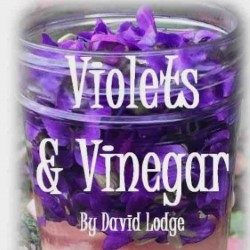
August 16-19 - The Space @ Surgeon Hall Three women. One space. A neglected housewife, a determined party girl and a clueless teacher shamelessly expose their sexual exploits. Join us as they tell the sweet and sour story of their love lives. This character comedy is sure to make you laugh out loud. Think Alan Bennett meets Fleabag (minus the hot priest). Adapted for a modern audience, this play was originally written by David Lodge for the Carver Theatre in the 1990s. Edinburgh’s Fringe is for many a time for lust, love and laughter and Violets and Vinegar has those in spades. This modern adaptation of David Lodge's masterpiece had me chuckling throughout. The trio of women on stage captured the attention of the audience as they each wove their individual tales that were equal parts relatable and uproarious. The characters are brilliantly written, each representing a different facet of womanhood. The neglected housewife, the determined party girl, and the clueless teacher come together in an unexpected yet brilliant blend of stories. The housewife's narrative, in particular, struck a chord with its unapologetic exploration of societal expectations of women and sex and the toxic undercurrents that can simmer beneath the surface. The skills of the women on stage coupled with beautiful, engaging writing allowed for the exploration of issues around sex, relationships and expectations of women with both humor and poignancy. The witty dialogues and comedic timing kept the audience engaged while touching on these deeper, thought-provoking themes. If you're seeking an evening of laughter, introspection, and brilliant character comedy, this play is an absolute winner. Don't miss the chance to witness these women's stories unfold on stage – it's an experience that will leave you laughing, reflecting, and applauding for more! - Aoife Burke 4/5 Book your tickets here > Violets and Vinegar | Theatre | Edinburgh Festival Fringe (edfringe.com)  The Most Toast
August 19th - Hootenannies @ The Apex Somebody in the audience will have eaten the most toast. We will find them. In a world where serious global issues like climate breakdown, political turmoil, and technological advancements dominate our thoughts, "The Most Toast" is here to address the most pressing question of our era: Who, among us, has truly consumed the most toast? A searing look into one of the most important questions of our time, led by two of Edinburgh Fringe’s most wily detectives and hosts Ollie Horn and Katharyn Henson, this show deals with possibilities and absolutes, with numbers of slices and types of toppings. It is a show with passion, wit and heart mixed with some healthy goading of audience members and their possible childhood trauma! With the solemnity of a Shakespearean tragedy, the hosts of the show take to the stage, demanding, nay forbidding, applause. Their furrowed brows and furiously scribbled notes on audience member transgressions and stupid questions such as, “Does bread count?”, let us know they mean business. The consumption of toast is not a trivial matter. Questions are thrown at the audience members - “How often do you eat toast?”, “But how many slices?”, “When did you eat your very first slice of toast?” “Is your childhood trauma the reason there’s been a steep decline in the amount of toast you eat?” ... The list goes on. As audience members take turns confessing their toast habits, or lack thereof, we witness the hosts' investigative prowess in action. They employ the finest techniques of forensic analysis, such as counting the number of days in a year and multiplying that by two for audience members who insist they never take a break from toast – not even on Christmas Day! During a time when the world is rife with uncertainties and complex ethical and moral dilemmas, "The Most Toast" serves as a beacon of clarity. After all, what's the point of AI ethics, space exploration, and a crumbling eco-system if we can't even figure out who's the reigning toast champion? Truly, the show embodies the spirit of our times, where existential crises are resolved with the pop of a toaster and some butter and jam. - Aoife Burke Book your tickets >Hootenannies @ The Apex | Venue number 108 | Edinburgh Festival Fringe (edfringe.com) 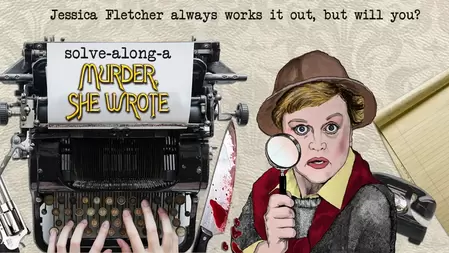 Solve-Along-a-Murder-She-Wrote
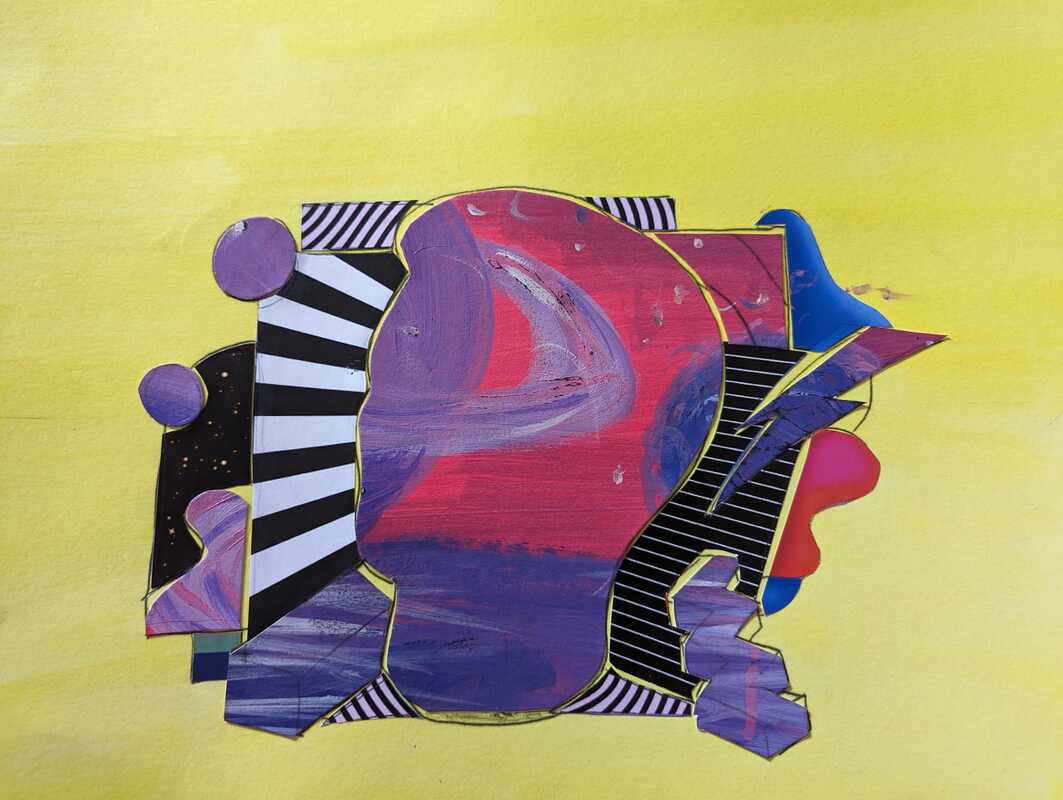
Aug 15-19, 21-26 - theSpace@ Symposium Hall - Amphitheatre theSpace @ Symposium Hall - Amphitheatre Cult-hit event Solve Along A Murder She Wrote comes to Edinburgh with an interactive screening of the classic Murder, She Wrote episode, Sing a Song of Murder. The critically acclaimed show, hosted by super-fan Tim Benzie, features: a race to solve to the crime via the Fameometer and the Suspiciometer; clips and bios of the guest stars; a singalong to the theme tune with new lyrics and more Solve-Along-a-Murder-She-Wrote has been on my list of shows I have wanted to experience for a good few years now since it became a regular staple at The Prince Charles Cinema and the timing never worked out to grab myself a ticket to watch Jessica Fletcher in action in that famous sloped screening room but thankfully it has come north for the Fringe! This experience offers fans of the iconic TV series Murder, She Wrote a chance to immerse themselves in the sleuthing world of Jessica Fletcher while actively participating in solving the crime. Jessica Fletcher is a mystery writer who finds herself consistently entangled in real-life murder investigations. With her keen intellect, Jessica unravels crimes in her small coastal town of Cabot Cove and beyond. For our event we’re watching an episode from 1985 called ‘Sing a Song of Murder’ where Fletcher rushes across the pond to London in an attempt to aid her cousin, also played by Fletcher, a famous Liverpudlian actress in the theatre, who has become the target of several murder attempts. Our host Tim Benzie is the perfect host as he dresses up in a range of Fletcher’s outfits and wigs – including that grey jogging outfit seen in the memorable opening credits and his knowledge of the show which spanned twelve seasons and 250 plus episodes is unrivalled. Benzie also uses his understanding of the era culturally and how that informs the casting and creative choices. Benzie’s insights help keep the audience engaged with the show and not just passively watching the episode unfold passively as if you were watching it on ITV3 in the midafternoon. Our fringe audience is encouraged to become amateur detectives like Fletcher, engaging their minds as we try to piece together the clues, motives, and suspects by using paddles with her face on them to raise when we see something suspicious from our rogue gallery of guest stars and thanks to the heavy-handedness of the writing there will be plenty of wrist action being undertaken. We regularly rank on the Suspiciousometer our suspects and test the theory that the most famous guest star in each episode is potentially the murderer we are looking for. The event is well-balanced with interactive elements and follows the mystery on the screen. Due to the huge pantheon of “Murder She Wrote” episodes Tim Benzie mixes up the episodes for live shows and I’m already looking forward to seeing more of these in the future! - Lee Hutchison 4/5 Book your tickets here > Solve Along A Murder She Wrote | Cabaret and Variety | Edinburgh Festival Fringe (edfringe.com)  Sound and Vision Sound and Vision: Calling all you Pretty Things and Diamond Dogs. Get your glad rags on and warm up your vocal chords with this unique, immersive painting experience. You will explore the Bowie cut-up lyric technique and apply this to create beautiful acrylic paintings whilst immersed in his music. You will be guided by the award-winning artist Denise Harrison. I wouldn’t consider myself an artist. I certainly wouldn’t think of myself as a painter. I lean more towards crafts such as crochet as it’s pretty hard to screw up. Yet I often find myself transfixed, watching videos of true artists taking a blank canvas and producing the most beautiful, captivating art with what seems like such easy, measured brushstrokes. I’ll admit I was a little daunted about attending this event, but after spending five hours in the company of the organiser, Denise, and many other wonderful, amateur artists, I now know that there is a painter, somewhere deep down inside of me. All I needed was some time and guidance to tease it out. And some Bowie blasting in the background! Denise Harrison, the award-winning artist leading the event, was an absolute gem. Her passion for both art and Bowie's music was evident in her every word and action, even down to her glitzy outfit – very Bowie-esque! She guided us through the process of acrylic painting with grace and expertise, ensuring that even those of us who might have been a little hesitant felt at ease. We learned some basic skills and were then left loose to play and create with Denise offering regular praise, tips and reassurance. At no point did I feel like I needed to be “good” at painting to be there. As lunchtime rolled around, we were treated to an acoustic set of some classic Bowie music, delivered by a wonderful, young duo before jumping back into the second half of the event where Denise encouraged us to cut up our paintings and create some Bowie inspired collages. Dear reader, I will admit that I was unable to cut up my painting. Having spent two hours on it, I simply couldn’t cut it up. The true magic of "Sound and Vision" lay in its ability to empower everyone in the room, regardless of their artistic background. I'm no professional artist, or even an amateur one, but under Denise's guidance and Bowie's muse, I created a painting I am genuinely proud of. It's a testament to the event’s ability to ignite creativity and foster self-expression in all of us. In the end, "Sound and Vision" was an experience that will stay with me for quite a while. It was a celebration of art and music in a warm and welcoming environment. If you have the chance to attend a similar event in the future, run by the fabulous and funny Denise, don’t miss out! A huge thank you to Denise for curating such an unforgettable journey into the heart of creativity and for unlocking the artist inside me. - Aoife Burke www.deniseharrisonart.com
 Character Flaw
Aug 12, 14-19, 21-26 - Greenside @ Nicolson Square Step into the world of neurodivergence with Pip and experience a captivating journey through her life with ADHD. With storytelling, sketches, personal anecdotes, and even a trumpet performance, Pip navigates the challenges and celebrates the joys of living with ADHD. Gain insight into the often-overlooked experiences of women with ADHD and explore how it has affected Pip's coming-out journey and self-acceptance. We return to the world of ADHD again this week in Pip Dawson’s Character Flaw. Earlier this week in our detailed review of ‘Why Am I Like This?’ which is playing just down the street from this show we explored why we are seeing a wave of in particular female lead shows talking about neurodivergent conditions and the long road to this moment that I’d recommend you read by clicking here. For many in the public, there is the historical association of ADHD as being something hyper young boys have which has been an issue which has invalidated the experience of many in particular women for generations. Dawson explains the three types of ADHD diagnosis which are the inattentive type, characterised by difficulties in sustaining attention and following through on instructions; the Hyperactive-Impulsive type marked by restlessness and impulsive actions and the combined type which is a blend of the two. Dawson’s one-woman show is a fascinating blend of artist and condition in how it is constructed and how these types can display, contradict and challenge and frustrate an individual through a range of what might seem like unrelated skits but paint a larger picture about ADHD. Dawson highlights that one aspect of ADHD that gets treated like a superhero trait is hyper-focus. Hyper-focus is a state of intense concentration and absorption in a task, often to the point of losing track of time and surroundings. It can be contrasted with another type of ADHD where there can be forgetfulness and turning up late. Dawson brings this to life by being “late” for her show. Dawson's construction of the show is that of a woman in a state of hyper-focus and in a flow state which can happen for ADHD individuals when they are passionate about a topic. Dawson pulls examples from her life of how her ADHD impacted her which might seem random but tell the fuller picture of how certain behaviours are missed in women. Hyper-focus is something that needs a structure to thrive in or people will miss breaks, work to the point of exhaustion or strains on relationships. Dawson can channel her hyper-focus and passion into delivering what audiences and the general public need to see to be able to learn from and that is rich and colourful lived experience examples and to move away from the language and ingrained sexism of the medical model. It is incredibly challenging for anyone to put themselves out there during the fringe but for neurodivergent individuals dealing with the anxiety, potential negative feedback from audiences or critics and the many struggles that go along with it. It should not be taken for granted what an amazing job Dawson does to be so vulnerable on stage, to share her deepest fears, embarrassments and past traumas. The media and those within it have been so quick to label the rising numbers of ADHD diagnoses as a trend, others make a platform of making the most hateful of comments the LGBTQI+ where studies have shown there is a higher prevalence of neurodivergent conditions among them. Dawson proudly gives so much of who she is, and what she stands for and paints her world and the show with a rainbow. For those who came to the show with shared experiences or those learning about the range of ADHD for the first time, there are plenty of nodding heads throughout and Dawson’s message is resonating and it’s her who deserves the platform. 4/5 Book your tickets here > Edinburgh Fringe - Character Flaw Lee Hutchison |
|